
BUSINESS PROCESS AUTOMATION
Reduce touchpoints. Automate routine work.
Planisware can do far more than store project information. Used effectively, it can coordinate work, apply business logic, route activity, enforce requirements, expose exceptions, and reduce the administration required to manage a high-volume NPD portfolio.
Find Your Unnecessary Touchpoints →FIRST PRINCIPLE
Don't automate a bad process.
Before automating anything, Velocity NPD asks three questions:
- Does this step need to exist?
- Does a person need to perform it?
- Does the project manager need to be involved?
Only then do we automate.
DIRECT DELEGATION
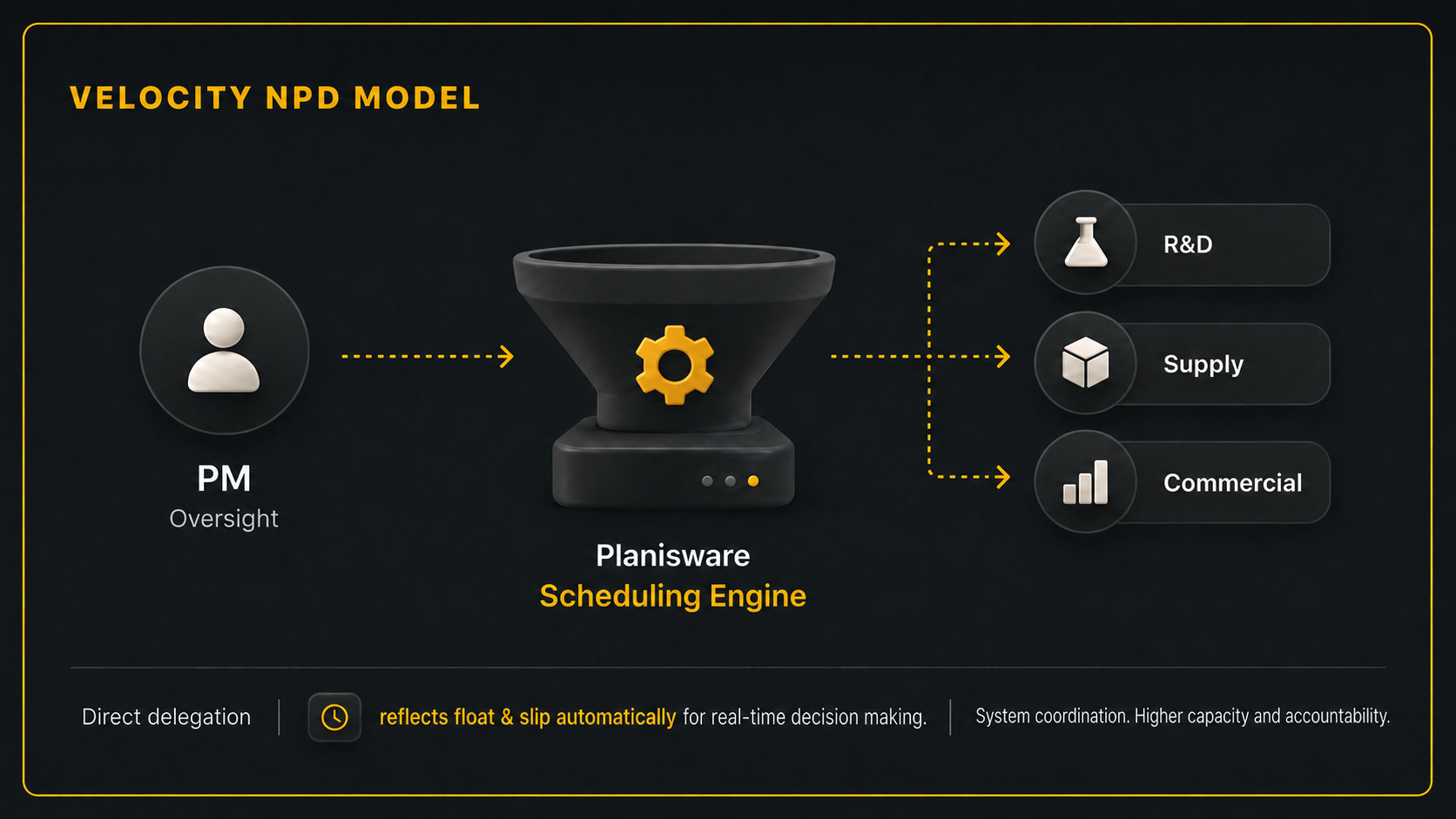
Let the scheduling engine coordinate execution.
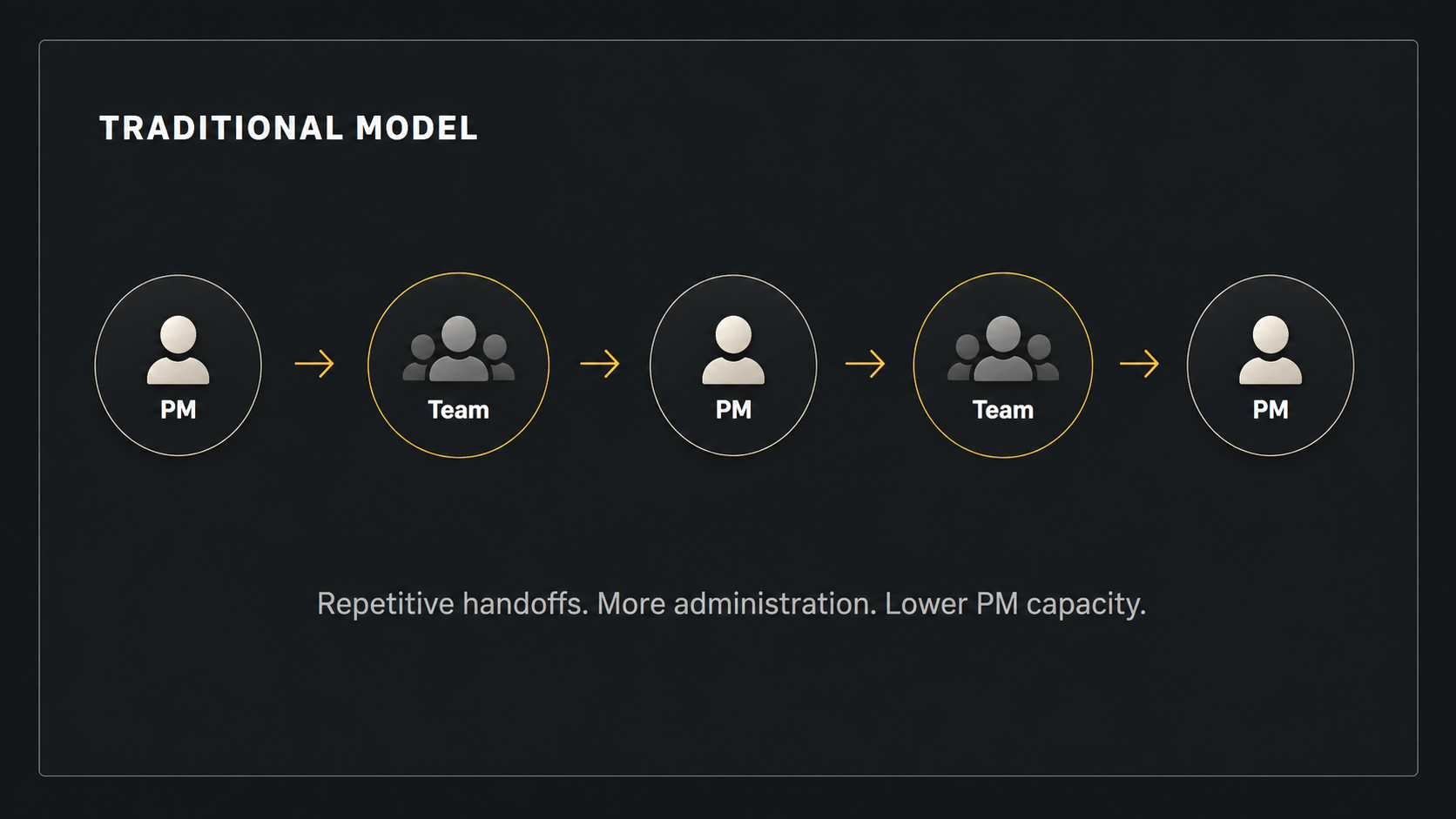
A major source of NPD administration is the project manager acting as the intermediary between the project plan and the teams doing the work.
AUTOMATION OPPORTUNITIES
Automate the work around the work.
PROOF FROM PRACTICE
Automation grounded in real enterprise NPD.
This approach comes from using Planisware automation in a global CPG environment, including strategic and financial checks, business thresholds, project governance, cross-functional delegation, and scheduling-engine-driven execution.
Planisware has publicly featured Nick Duncan's work and customer-side experience, including business-process automation and end-to-end global NPD.
COMMON QUESTIONS
Planisware automation FAQs.
What do you mean by touchpoint reduction?
Reducing the number of times a person—especially the project manager—must manually route, copy, update, chase, or re-enter information when the system can coordinate that activity reliably.
How does direct delegation work?
Project work is assigned to the cross-functional teams responsible for execution, while the Planisware schedule manages dates and dependencies. The PM retains orchestration and risk oversight without serving as the intermediary for every task.
Does automation mean removing governance?
No. Good automation can strengthen governance by making criteria, thresholds, exceptions, and required actions more consistent while removing administrative steps that do not improve the decision.
Can this really increase the number of projects a PM can manage?
It can materially improve PM leverage when the project portfolio and operating model are suitable. In one mature high-volume NPD environment, the model successfully supported PMs overseeing 70+ concurrent projects. That result should not be treated as a universal staffing benchmark.
Where is your PM acting as a human routing engine?
That's often the best place to start looking for automation value.
Map the Touchpoints →